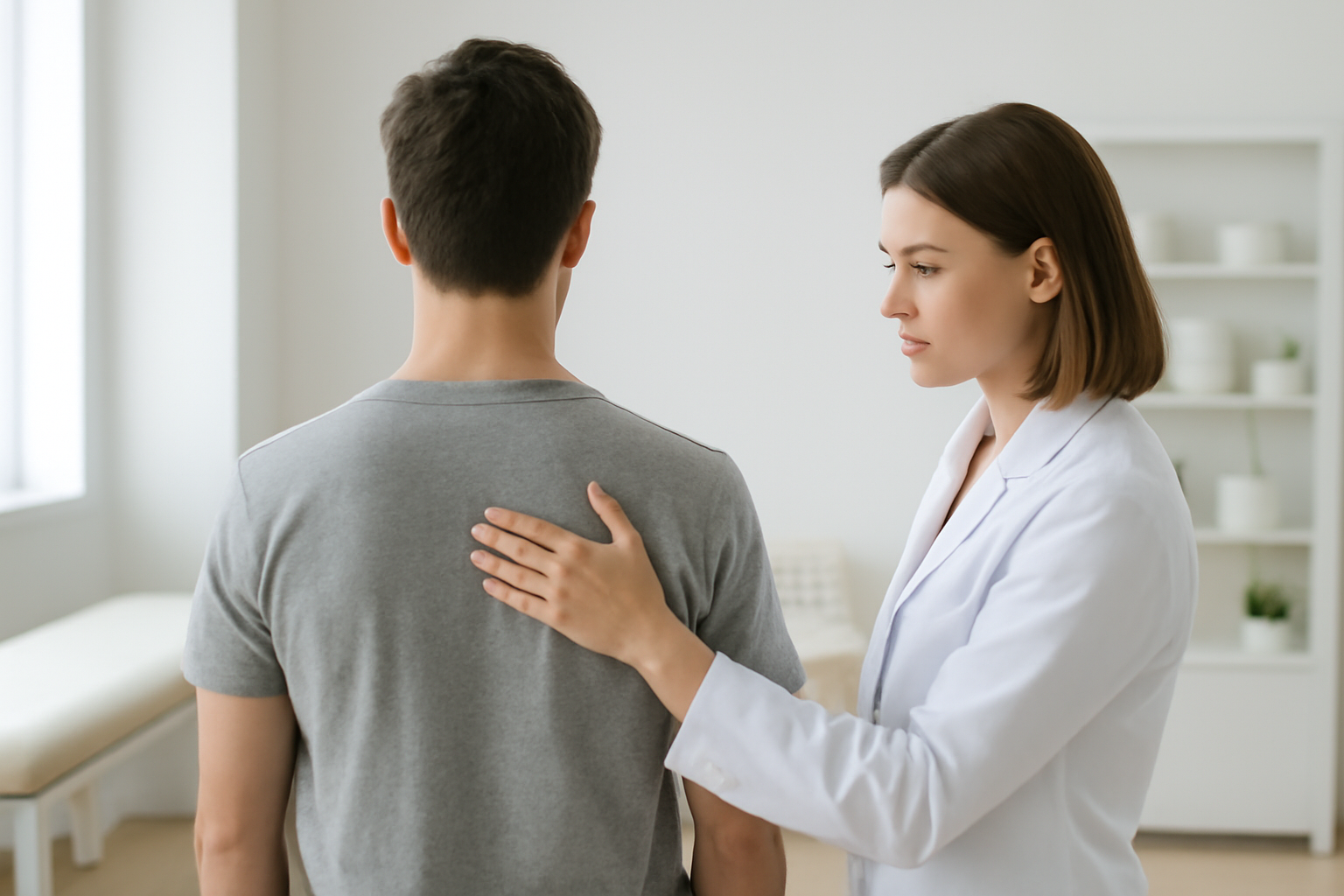
What Causes Back Pain? When Should It Be Assessed?
What causes back pain, which symptoms matter and how can it be related to scoliosis? Learn about the assessment process and the right next steps.

What you need to know about spinal curvature: signs, monitoring and exercise therapy.
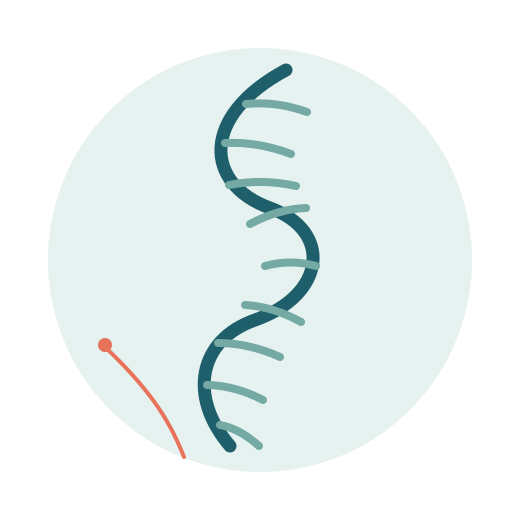
Scoliosis is more than a sideways curve; it is a three-dimensional change in the spine that also involves rotation of the vertebrae.
A sideways curve of the spine, when viewed from the front, combined with rotation around its own axis.
Most commonly idiopathic. Congenital and neuromuscular types also occur.
It can occur at any age, but is most often noticed between ages 10–15 during rapid growth.
Look at your child’s back from behind while bathing or getting dressed. Small asymmetries can be an important clue.
Put your feet together
Bend forward
Observe the back from behind
This test does not diagnose scoliosis; it only helps identify asymmetry.
If you notice a sign, seek an assessment without panicking. Consult a doctor and a physiotherapist experienced in scoliosis.
Asymmetry is noticed at home or during a school screening.
An examination and, if needed, a standing spinal X-ray.
Monitoring, exercise, bracing or further assessment.
Growth and changes in the Cobb angle are monitored.
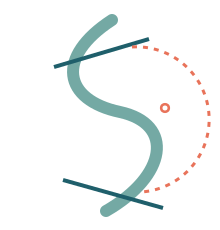
The angle between two lines drawn on an X-ray is measured. This value is considered alongside age, growth and clinical findings—not on its own.
The approach depends on the curve’s severity, age, growth potential and the individual’s needs.
Regular monitoring for low-degree curves with a low risk of progression.
A personalised, three-dimensional exercise method focused on breathing and posture.
During growth, for suitable curves, to help control progression.
For severe or progressing cases, following assessment by a specialist team.
An evidence-based exercise clinic in İzmir focused on spinal health.
Clear, current and reliable information for families and adults.
Start with reliable information and straightforward answers.
The course of scoliosis varies from person to person depending on age and curve severity. The aim is to control progression and support posture and quality of life. Early assessment gives you more options.
Most children can take part in sports with appropriate guidance. Sport supports overall health but does not replace scoliosis-specific exercise. Ask your doctor about choosing activities.
There is no evidence that carrying a heavy or one-sided bag causes structural scoliosis. However, keep the weight balanced to reduce strain and discomfort.
The decision to use a brace is made by a doctor after considering growth potential, curve location and Cobb angle together. Not every person with scoliosis needs a brace.
Yes. Appropriate exercise can help with pain management, mobility, breathing and everyday function.
Scoliosis in children and teenagers is often painless. Adults may experience muscle fatigue or pain. New or severe pain should always be assessed.
The monitoring interval depends on age, growth rate and curve severity. Closer follow-up may be recommended during growth.
For personalised information and assessment, you can contact Vertikal Fizyoterapi.
AddressMansuroğlu Mah., Lider Centrio
Bayraklı / İzmir Near Bornova
Opening hoursMonday–Friday 09:00–20:00
Saturday 09:00–15:00